
Creative workflows
1980s Photo Prompt: Two Tested 80s Home-Video Prompts
Two 1980s AI video prompts we ran from one photo each on MiniMax H3 Max: the clips, what differed from the prompt, and what worn-tape wording changed.
Video examples here were generated on Cicadas and keep their model, settings and date. Cicadas earns money when you generate with these models. How we test
- Test window:
- 2026-09-27 – 2026-11-12
- Clips recorded with these models:
- 190
- Models:
- MiniMax H3 Max
- Their provider cost:
- ≈$56.58
- Selection:
- every clip we keep is listed with its settings, cost and request ID; failed or discarded runs are listed in the test record.
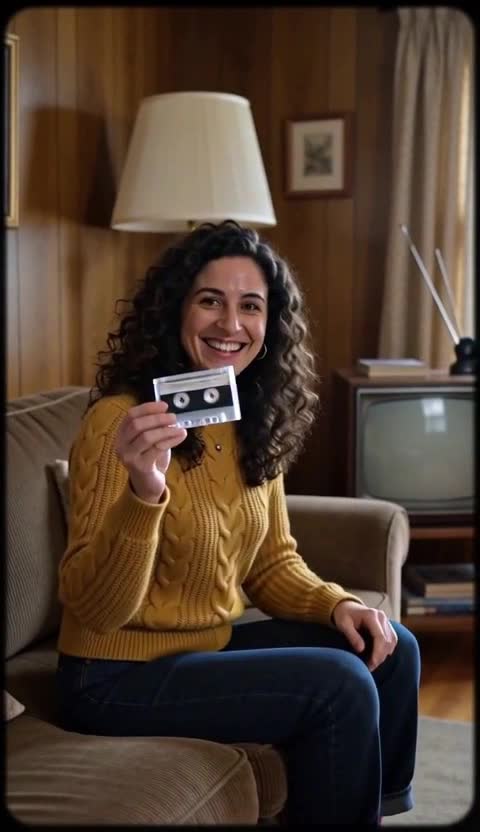
Short answer: a 1980s prompt needs six things: the look of an old tape (soft focus, faded colours, tracking lines), one set with a few period objects, wardrobe and hair, one action, a Sound line and "no text, no logos". Below are two prompts we ran from one ordinary photo each on MiniMax H3 Max, with the clips and what differed from the prompt. Each took 5 seconds at 480P and 9:16 and cost USD 0.25 at the list price of USD 0.05 per second. To do it with your own photo, open the 80s AI video generator.
We make Cicadas, so the page links are ours. The clips were generated on November 10, 2026 from the site's own sample photos. What we say a clip shows comes from frame sheets we looked at. Sound was measured, not listened to, so we quote what the prompt asked for and do not describe what you hear. This post is one part of our November trends test.
Prompt 1: the living room (second take)
This is the prompt, word for word:
Vertical, one continuous handheld shot of worn 1980s VHS home video footage, as if copied from an old tape: low resolution and blurry, washed-out faded colours with a warm yellow cast, red and blue colour bleeding around edges, horizontal tracking lines rolling through the picture, flickering noise along the bottom edge, and the image wobbles now and then. The person from Image 1 sits on a brown corduroy sofa in a wood-panelled living room with a floor lamp and a boxy television, wearing a pastel knitted sweater and high-waisted jeans, with their hair styled in a big 1980s blow-dry. They notice the camera, laugh, and wave at it, then hold up a cassette tape to show it. Keep their face exactly as in the photo. The camera sways a little as if held by a family member. Sound: tape hiss, a muffled room and a short laugh, no music. No on-screen date, no text, no logos.
What came out: a wood-panelled room with a floor lamp and a boxy television. She smiles, waves, laughs, reaches down and holds up a cassette. The picture sits inside a rounded black frame with a warm cast.
What differed from the prompt: the picture stays fairly sharp, with no rolling tracking lines. She wears the photo's own mustard sweater and hair, not the pastel sweater and 1980s blow-dry the prompt described.
What changed between take 1 and take 2
Take 1 was the same scene with a shorter look line: "looks like a 1980s family home video recorded on a VHS camcorder: soft focus, washed-out warm colours, slight colour bleed, faint horizontal tracking lines and a little tape wobble". It came back as a clean, modern picture, so we did not publish it.
Take 2 rewrote the opening as "worn 1980s VHS home video footage, as if copied from an old tape: low resolution and blurry, washed-out faded colours with a warm yellow cast, red and blue colour bleeding around edges, horizontal tracking lines rolling through the picture, flickering noise along the bottom edge". The result gained the rounded dark frame and the warm cast. It still did not show rolling lines, and the picture was still fairly sharp.
What this tells you about the model: it honoured the colour words and added a rounded black frame on its own (the prompt has no frame words), and it ignored the scan-line and blur words. Put the words you care most about first, expect a warm, framed look rather than a degraded one, and if you need real tape damage plan to add it afterwards in an editor. One test per wording is not a rule, so treat this as what happened on our two takes.
Prompt 2: the arcade
Vertical, one continuous handheld shot that looks like 1980s VHS camcorder footage: soft focus, slightly faded colours with neon glow bleeding at the edges, faint tracking lines. The person from Image 1 stands at an arcade cabinet in a dim 1980s arcade lit by pink and blue neon, wearing a denim jacket with rolled sleeves and a striped T-shirt, with feathered 1980s hair. They play with both hands on the joystick and buttons, then turn to the camera, grin and raise one fist in victory. Keep their face exactly as in the photo. The camera sways a little. Sound: arcade bleeps, coins dropping and tape hiss, no music. The cabinet screens show only abstract coloured shapes. No text, no logos.
What came out: a neon arcade, a denim jacket and striped T-shirt, feathered hair. He plays, turns, grins and raises a fist. The picture sits in a rounded black frame with a neon glow.
What differed from the prompt: the cabinet marquees carry made-up lettering although the prompt asked for no text. The prompt did say the cabinet screens show only abstract shapes; the marquees were left unsaid, which is the lesson. Name every surface that could carry lettering.
More 1980s scene ideas (not recorded by us)
These are prompt variations written from the same pattern. We have not run any of them, so we do not know how they come out. To use your own wording, send it to AI reference to video with your photo; the 80s page only runs its two fixed scenes. Replace the scene line in either prompt above and keep the look line, the Sound line and the ending.
- Prom photo booth: the person from Image 1 in a satin jacket against a plain backdrop with balloon arches, laughing and striking one pose.
- Roller rink: the person gliding along a rink rail under a mirror ball, then waving at the camera.
- Shopping mall: the person walking past a fountain and plants, turning to the camera with a shopping bag.
- Backyard birthday: the person at a picnic table with a cake and paper hats, blowing out candles.
- School photo backdrop: the person in front of a blue-grey studio backdrop, adjusting a collar and smiling.
- Aerobics class: the person in a headband and leg warmers following a simple arm routine in a studio with a wooden floor.
- Kitchen phone call: the person leaning against a counter with a long-corded phone, laughing at the camera.
Keep one action per prompt.
Using the same words for a still photo
If you want a 1980s still instead of a clip, the same ingredients apply in an image model: the set, the wardrobe and hair, the look of the print (faded colours, soft focus, a slight flash glow), and "no text". A still cannot show tape wobble or tracking lines, so drop those words and describe the print instead. We have not run this wording on a still, and Cicadas has no image-generator page for it, so we have nothing to link here.
How to do it on Cicadas
- Choose a sharp photo of yourself, or of an adult who agreed, with the face large and unobstructed.
- Open the 80s AI video generator for the two fixed scenes (living room, arcade), or paste one of the prompts above into AI reference to video to use your own wording.
- Keep "keep their face exactly as in the photo", one action, and the "no text, no logos" ending.
- Read the quote, generate, then watch the whole clip and pause at the start, middle and end next to your photo.
- If the picture is too clean, add the worn-tape wording from take 2 in AI reference to video and look again; the 80s page's scenes are fixed.
Cost: MiniMax H3 Max on Cicadas is 63 credits for 5 seconds at 480P, about USD 0.62 on the first credit pack, quoted before you generate. Prices as of November 3, 2026, read from our Pika H3 Flex post; the page shows the live quote. For how this model reacts to prompts in general, read the MiniMax H3 prompt guide; for the cost of a month of tests, see what 255 samples cost us. Other trends we tested are on AI video trends.
Questions
What should a 1980s photo prompt include?
Tape-look words (soft focus, faded colours, tracking lines), one set with a few period objects, wardrobe and hair, one action, a Sound line, and "no text, no logos". Describe the tape, not the decade alone: our first take named VHS and got a clean modern picture.
Can I use my own photo for an 80s AI video?
Yes. Use a photo of yourself or of an adult who agreed, with the face large and sharp, and write "keep their face exactly as in the photo". Both clips here were made from one ordinary photo each.
Why did my 80s clip come out too clean?
Naming VHS is not enough. Our first living-room take looked clean and modern; the second added worn-tape wording and got a rounded dark frame and a warm cast, though the picture stayed fairly sharp.
Why does the model add text in my 80s video?
It fills a set with lettering even when told not to. In our arcade clip the cabinet marquees carry made-up lettering although the prompt said no text, so check signs and screens before you share the clip.
Does the same prompt work for a still photo?
The look words carry over to an image model, but we did not test that, and a still cannot show tracking lines or wobble. Expect to adjust the wording for a single frame.
Ready to try one? Open the 80s AI video generator and start from the scene closest to yours.
Tools used in this guide
- 80s AI Video Generator80s AI video from one photo of you: a VHS-style living-room clip or a neon arcade clip, 5 seconds, vertical, with sound. 63 credits, quoted first.
- AI Reference to Video: Consistent CharactersAI Reference to Video: Consistent Characters. Make a 5–15 second clip with MiniMax H3 Max. Start at 63 credits; inspect the quote and download from My videos.